Assume that we have a Right Triangle and we label the side that is the hypotenuse with c and we label the other sides with a and b.

This equation can be proven by constructing four right triangles that are equal and placing them together in a way that creates a square with sides of length c inside another square. This is shown below:
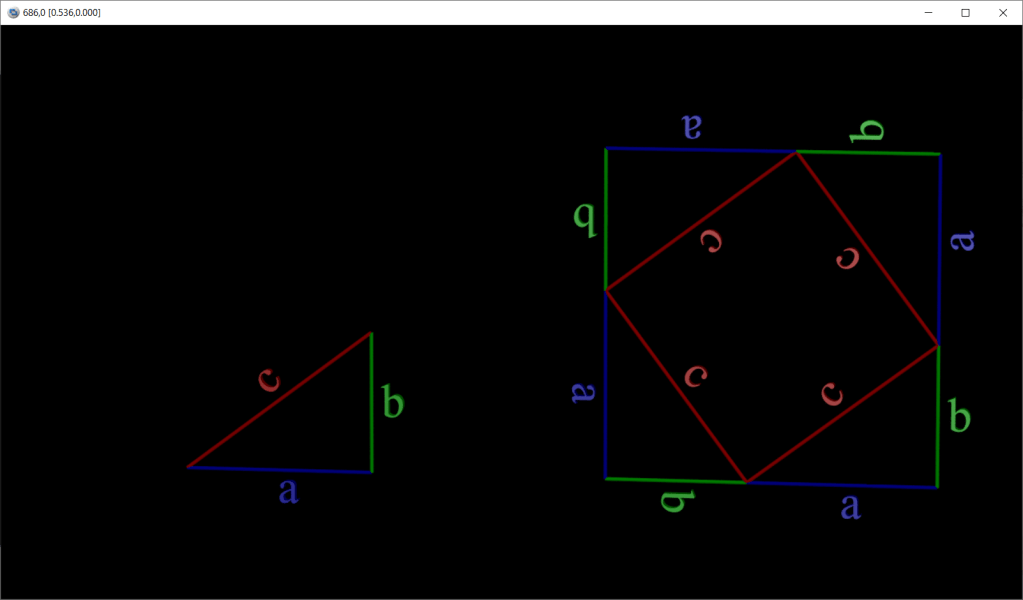
The bigger square has an area of 

Each right triangle has an area of 
We get the bigger square when we add together the smaller square and 4 of the right triangles.

We can expand the left side and combine scalars on the right side:

We can cancel the term that appears on both sides:

 Vectoreverything